Chapter 09
Why I Took a Pay Cut to Join Airtours, and Why It Became One of the Best Decisions of My Career
Never judge an opportunity by the size of today's salary or job title. Judge it by the size of tomorrow's vision.

Why I Took a Pay Cut to Join Airtours, and Why It Became One of the Best Decisions of My Career
Most people assume that career progression comes from staying loyal, working hard and waiting patiently for the next promotion. Sometimes it does, but every so often you reach a point where you realise that no amount of hard work will overcome an organisational structure that simply has nowhere left for you to go, and when that moment arrives the biggest risk is often not leaving but staying.
That was exactly the position I found myself in during my short spell at Sunworld following the collapse of International Leisure Group. Peter Long had done an outstanding job of rebuilding a new business by attracting many of the industry's brightest executives, including Nigel Wright in Finance, Manny Fontenla-Novoa in Operations and Len Mooney in Contracting, all exceptionally capable people who would each go on to enjoy hugely successful careers.
The difficulty, however, was that whilst Sunworld had assembled an extraordinary collection of senior talent, it had also created an organisation with far too many chiefs and not enough Indians, leaving ambitious younger managers with very little room to develop.
From my admittedly young and rather arrogant perspective, I believed I was making a significant commercial contribution to the business, as I was responsible for much of the pricing and commercial decision-making that drove profitability. Yet I owned no equity, every senior position above me was already occupied, and perhaps most importantly, nobody seemed particularly interested in discussing where my career might lead over the following few years.
Looking back now, I probably underestimated how difficult that situation was for the leadership team, but at the time it felt as though my future had already been decided for me.
Rather than simply becoming frustrated, I picked up the phone to the same head-hunter who had originally introduced me to ILG and asked a very simple question: "What else is out there?" As luck would have it, Airtours had recently floated on the Stock Exchange and was using the new investment to accelerate its expansion.
David Crossland wanted to strengthen what had largely been a home-grown management team by bringing in experienced people from elsewhere in the industry, and before long I found myself sitting in London's Dorchester Hotel with David Crossland and Harry Coe discussing the future of their business.
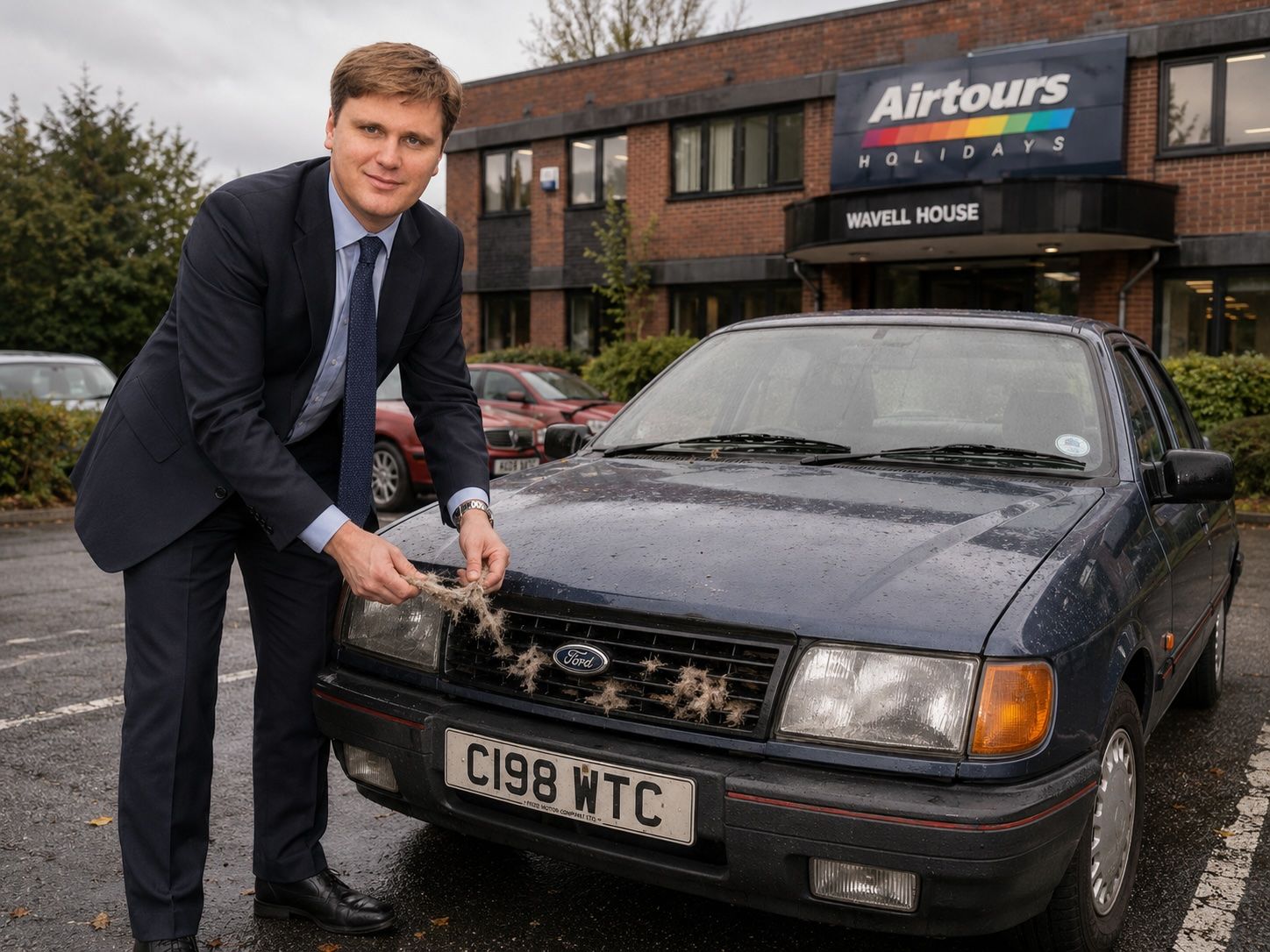
Two hours later I walked out having accepted a smaller job title, a reduction in salary and the prospect of swapping my executive top-end Volvo for what was essentially a salesman's Ford Mondeo. On paper it looked like a dreadful career move, and understandably my wife Sue questioned whether I had completely lost the plot.
What she could not see from the outside, but what had become crystal clear to me during that meeting, was that David Crossland possessed something far more valuable than a generous salary package. He had a vision that I completely believed in.
Unlike most tour operators at the time, Airtours was building a genuinely vertically integrated travel business where every part of the operation existed to strengthen the rest.
The tour operator would sit firmly at the centre of the organisation, whilst the airline would support approximately 60 per cent of peak-summer flying requirements, deliberately avoiding the expensive mistake of owning too much aircraft capacity during the quieter winter months, when cash flow became critical.
1991
The airline itself had already been established, the first aircraft were due to arrive in early 1991, and the company needed to grow the holiday business incredibly quickly to fill those seats. It was an elegant commercial model because every strategic decision supported the overall economics of the business rather than allowing individual divisions to pursue their own objectives.
I realised that whilst I might be accepting a smaller title, I was joining a business whose ambitions were dramatically larger than the one I was leaving, and I would much rather be a small part of a rapidly expanding organisation than a senior manager trapped inside one that had already reached its ceiling.
Personally, the move back to the North did not worry me greatly because I had previously lived in Bolton whilst working for the Bolton Evening News, had an existing circle of friends and still played rugby there most weekends.
For Sue it was a much bigger leap, leaving behind the support of her family and moving somewhere completely unfamiliar. Thankfully, before we had even settled into the rented cottage in Horwich that my old mate Paul Bentham had helped us find, she secured a teaching position at a local primary school and quickly built friendships that, remarkably, remain amongst our closest friends more than forty years later.
Looking back, there were two important leadership lessons hidden inside that career move.
The first was that talented people rarely leave purely for more money; they usually leave because they can no longer see a future, which is why I have always tried to spend time understanding the ambitions of key members of my own teams and mapping out realistic career paths wherever possible.
The second lesson was equally important because not every talented employee can be accommodated forever, and sometimes the honest answer is to help them move on rather than making promises you cannot keep. That is exactly why, when I left Sunworld, I chose not to bring Seamus with me immediately because I simply did not have the authority, budget or certainty that I could create the opportunity he deserved.
The irony is that what looked like a backward step on paper became one of the defining decisions of my career, reinforcing a lesson I have seen repeated countless times over the last four decades.
Never judge an opportunity by the size of today's salary or job title. Judge it by the size of tomorrow's vision and whether the people leading it genuinely know where they are going.