Chapter 17
The Airtours Lesson That Taught Me 2+2 Often Equals 2.5
Brand consolidation and cost-cutting rarely lead to 2+2 even equalling 4 — often it's just 2.5, and a complete waste of time.
The Airtours Lesson That Taught Me 2+2 Often Equals 2.5
Running the commercial engine room of Airtours taught me how important retail distribution was because, at that time, if High Street shops did not stock your brochures or sell you holidays, then there were only the retailers using the emerging Teletext TV channel to rely on.
1992–93
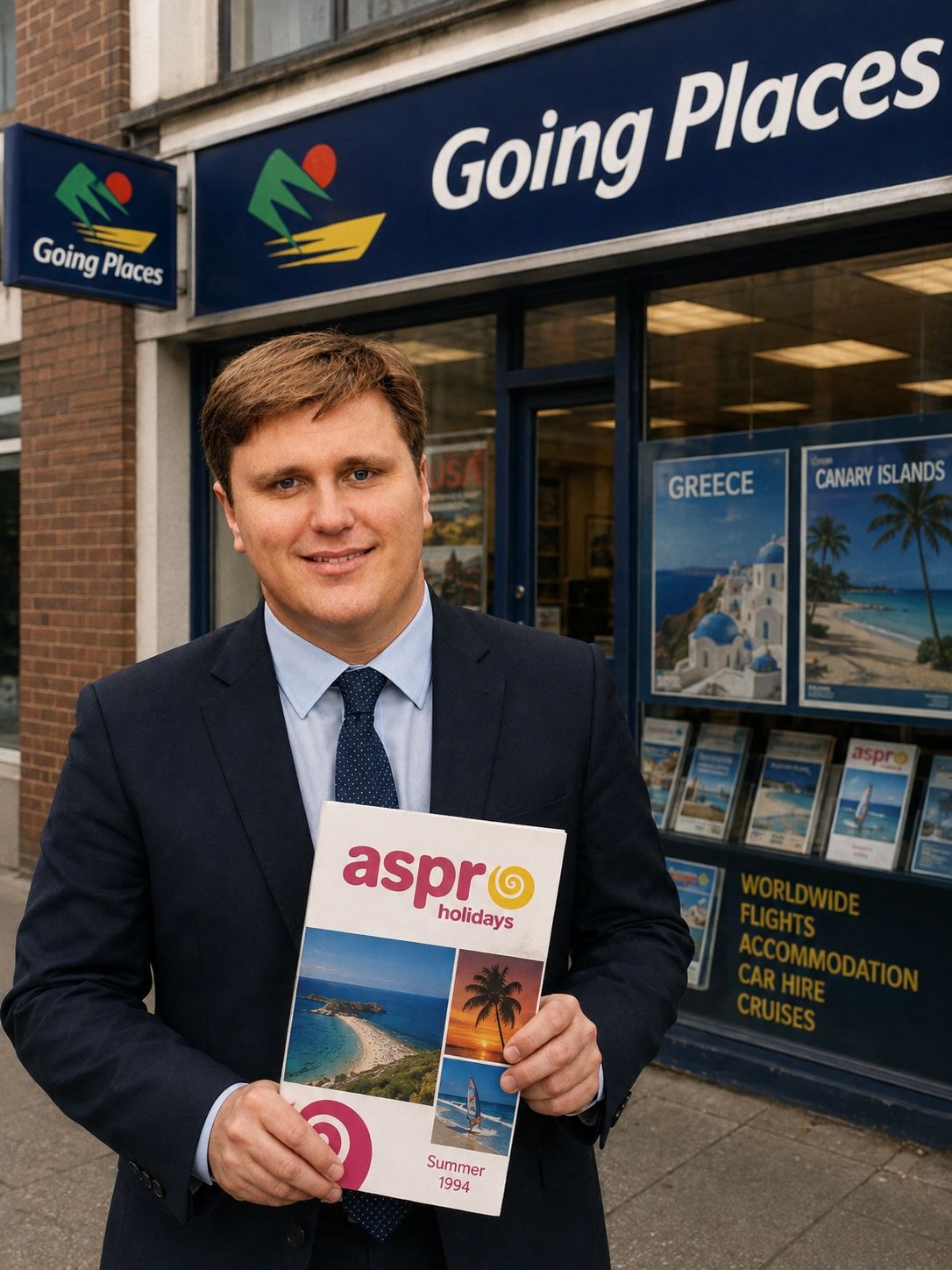
I was therefore pleased when David Crossland announced in September 1992 that the newly formed group board had decided to buy the 333-strong Pickford Travel brand, which he quickly followed up with the purchase of the 214-strong in June 1993, allowing it to rebrand the two into a 550-strong national retail chain called Going Places.
As the key commercial person at Airtours, it was natural that I should be a key liaison between the tour operation and the retail business, but I must confess I found it a very frustrating process in the early years.
The whole point of becoming a vertically integrated group was for the retail division to push passengers into the tour operation that could then fill an expanding airline, which acted as the “Bank” in David Crossland's eyes by charging the tour operation slightly higher than market-rate seat prices.
Although these flight costs frustrated me at times, I knew the game the group was playing: group profit per flight seat was the ultimate measure of the success of our integrated model, and therefore I played my part without complaint.
However, the commercial management of the retail division seemed determined “Not to read the memo” and refused to do anything to increase the sales of Airtours as they felt it compromised their independence as a retailer.
I, of course, wanted the key guys sacked immediately and replaced, but David Crossland just looked at me and said, “Steve, you need to learn patience, as you never remove somebody from a key position until you have somebody better lined up to take over their role.”
“You need to learn patience — you never remove somebody from a key position until you have somebody better lined up to take over their role.”
David Crossland, to Steve
1995
So, it took a few years before Peter Shanks, my long-term commercial buddy, was parachuted in from Thomas Cook in 1995 to run the commercial team, and we could really make vertical integration work fully with Tony Bennet leading Going Places.
The Aspro Holidays brochure, Summer 1994
In the meantime, Airtours had attempted and badly failed with its first tour operating purchase in the form of Aspro Holidays. Typical of many travel acquisitions, the deal had been done quickly because Aspro had cash flow issues and could be snapped up for what seemed a bargain £20m, including its in-house airline Inter European Airlines.
However, as with many deals of this nature done under time pressure and rushed due diligence, a “fraudulent” adjustment of flight cost was later discovered, and the parties headed to court to fight it out. (A story for a later Chapter)
This was my first experience of a business consolidation where nobody but the finance director came with the deal, which effectively meant we just had a second brand to play with.
The obvious solution was to pitch Aspro as the budget brand below Airtours and to try to shift Airtours further upmarket to be closer to its closest rival, Thomson. But most customers saw Airtours as the budget brand, leaving little room for another brand underneath it, making Aspro a bit pointless.
This is why I think Aspro became the unloved child in the Airtours stable, which meant it never really prospered and was seen more as a pain than a benefit.
So my learning from this part of my career was never to buy another travel business unless the synergies were based on increased distribution and sales, because brand consolidation and cost-cutting rarely lead to 2+2 even equalling 4, and often it's just 2.5 and a complete waste of time. Aspro was an opportunistic and bad acquisition, whereas the creation of Going Places was a brilliant strategic move that cemented Airtours' ability to expand even faster.
“Aspro was an opportunistic and bad acquisition, whereas the creation of Going Places was a brilliant strategic move that cemented Airtours’ ability to expand even faster.”